
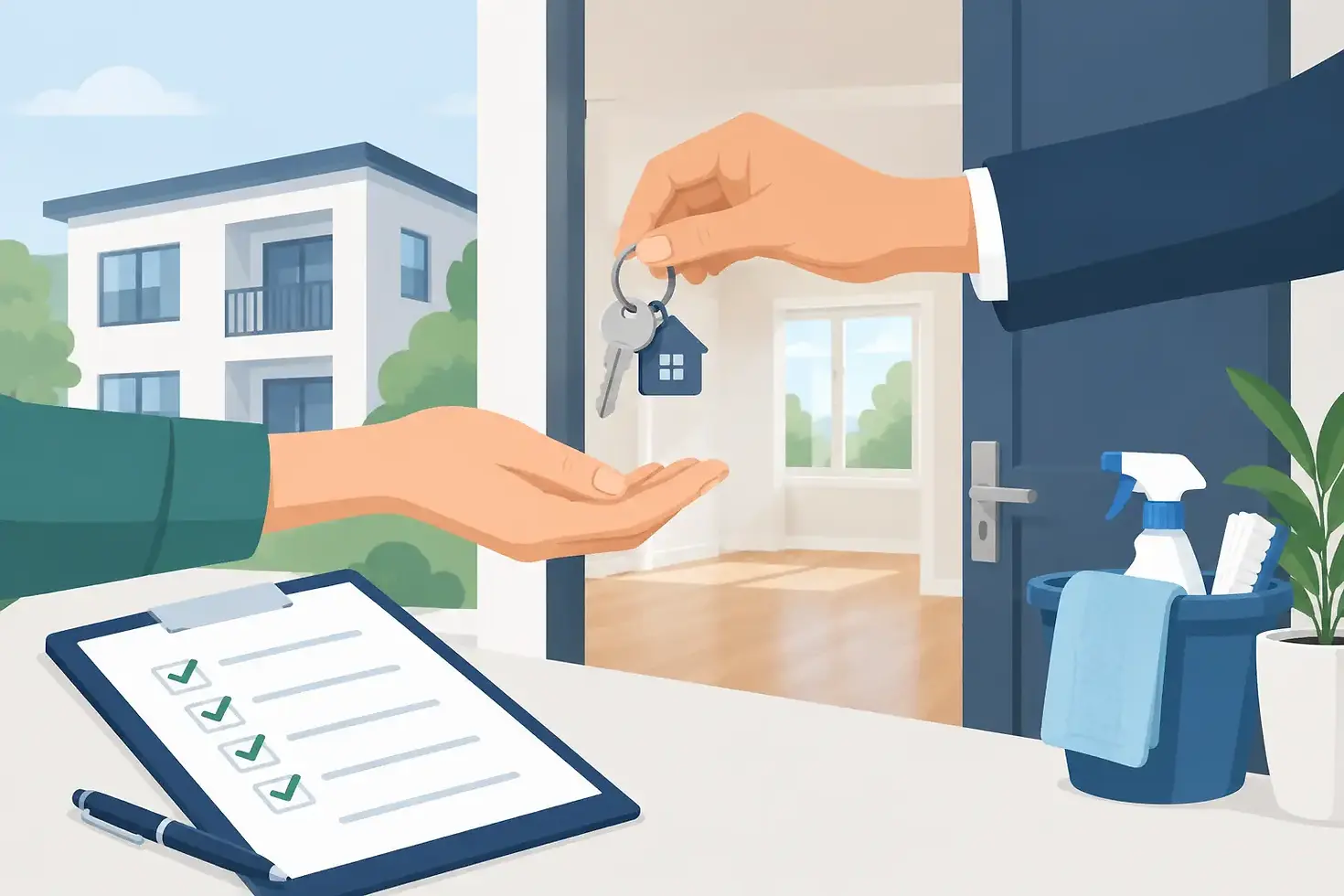
Rental Property Rekey Example: Turnover Plan

A rental property rekey example is easiest to understand at the moment a tenant moves out. The old tenant hands in two keys, but the property owner cannot know whether copies were made, misplaced, or given to a friend, contractor, or former roommate. Rekeying gives the next tenant a new working key without automatically replacing every lock on the property.
For Florida Panhandle landlords, this is a practical part of turnover security. It protects the incoming resident, helps establish clear control of access, and can cost less than replacing sound lock hardware. The right approach depends on the doors involved, the condition of the locks, the building's key system, and the timing between tenants.
A Rental Property Rekey Example From a Typical Turnover
Consider a landlord with a two-bedroom rental in Fort Walton Beach. The outgoing tenant has moved out, returned one front-door key and one mailbox key, and says the spare key was lost. The front door has a deadbolt and a keyed entry knob. The back door has a deadbolt. All locks are in good condition, but the front and back doors currently use the same key.
Rather than install new hardware, the landlord schedules a mobile locksmith before the new tenant's move-in date. The locksmith changes the internal pin configuration in the front and back deadbolts and the front entry knob so the old key no longer works. The landlord receives a new set of keys, provides the agreed number to the incoming tenant, and retains a clearly labeled management copy.
The mailbox lock may require a different solution because it is often controlled by the postal service or property association rather than the landlord. The landlord confirms who is responsible for that lock instead of assuming it can be included in the residential rekey.
The result is straightforward: the existing exterior hardware remains in place, but access changes. The departing tenant's key is no longer valid at the doors that were rekeyed. This is often faster and more economical than replacing every lock, especially when the hardware is secure, compatible, and functioning properly.
What Rekeying Actually Changes
A standard pin-tumbler lock contains small internal components that match a specific key cut. During rekeying, a locksmith changes those components so the lock accepts a different key. The exterior trim, deadbolt, latch, and strike plate generally stay in place.
That distinction matters. Rekeying changes who can use a key. It does not fix a loose deadbolt, a bent latch, a warped door, poor lighting, or a weak strike plate. If the lock sticks, the door does not close correctly, or the hardware is worn, replacement may be the better call.
It also matters that a returned key is not proof that old access is gone. Keys can be copied at many hardware stores, and tenants may have given a copy to a family member, cleaner, pet sitter, or roommate. A rekey removes that uncertainty at the lock itself.
Which Doors Should Be Included?
For most single-family rentals, start with every exterior door that provides entry into the living space. That usually includes the front door, back door, garage service door, side door, and any door between an attached garage and the home. A storage-room door may also need attention if it holds owner equipment or gives access to the residence.
Interior doors are more situational. A locked owner closet should be rekeyed if its key has been shared with vendors or prior occupants. Bedroom locks normally do not need a turnover rekey unless the property is rented by the room, used for short-term stays, or has a specific management policy.
Community gates, pool gates, mailboxes, and common-area doors can fall under separate access systems. Do not make changes to association-controlled or postal equipment without confirming the proper process. A locksmith can explain what type of lock is present, but the property owner or manager should verify who has authority to authorize work.
Rekey or Replace: How to Make the Call
Rekeying makes sense when the existing lock is in good condition, meets the property's security needs, and uses a keyway that a locksmith can service. It is particularly useful during an ordinary tenant change, after a key is not returned, or when the owner needs to remove access held by a former resident or vendor.
Replacement is often smarter when the hardware is damaged, corroded, unreliable, or low quality. A lock that binds can create a lockout for the incoming tenant and an emergency call for the landlord. Replacing hardware may also be appropriate when upgrading to a deadbolt, moving to a keypad or smart lock, or standardizing several units with matching finishes and approved key systems.
There is a trade-off with putting every door on one key. It is convenient for tenants and property managers, but it can create complications in multi-unit properties. If several units share the same key, one lost key affects more than one resident. In apartments, condos, or managed buildings, a restricted master-key system may offer better control, but it must be planned carefully to avoid accidental cross-access.
A Practical Rekey Process for Property Owners
The best time to schedule the work is after the outgoing tenant has fully surrendered possession and before the next tenant receives keys. If the unit is being cleaned, painted, or repaired, coordinate the timing so contractors do not have keys that will stop working before their work is complete.
First, walk the property and list every lock that controls access. Note whether doors already use one key or several. Check for missing keys, damaged hardware, loose strike plates, and doors that do not latch smoothly. This gives the locksmith useful information before arrival and helps avoid overlooking a side or garage entry.
Next, decide who needs keys after the work is completed. In a simple rental, that might be the tenant, the owner, and one authorized manager. Keep the key count limited and record where management copies are stored. If vendors need periodic access, consider a controlled process rather than handing out permanent keys.
After the rekey, test every new key in every assigned lock while the locksmith is still on site. Test from both sides of the door where applicable, and make sure the deadbolt extends fully into the strike plate. A key that turns only when the door is pulled hard may point to a door-alignment issue rather than a key problem.
Finally, update the property's key record. Write down the unit, the doors serviced, the date, the number of keys issued, and any hardware recommendations. Avoid labeling a key with the full property address. If it is lost, that label can turn a simple lost-key situation into a security concern.
Timing, Notice, and Access Rules
A rekey is a security task, but it still needs to fit the lease and applicable landlord-tenant rules. The cleanest timing is between tenancies. If a lock change is needed while a tenant is still occupying the home, communicate clearly about why access is being changed, who will perform the work, and when it will occur.
Do not use rekeying as a shortcut around formal possession or eviction procedures. Preventing a current tenant from entering a rental can create serious legal problems. When the situation involves a dispute, abandonment concerns, or unpaid rent, get appropriate legal guidance and follow the required process before changing access.
For an emergency such as a break-in, lost master key, or credible security concern, speed matters. A mobile locksmith can come to the property, assess the existing locks, and help restore controlled access without requiring the owner to remove hardware and take it to a shop.
Questions to Ask Before Scheduling Service
Clear communication helps the work go smoothly. Be ready to tell the locksmith how many exterior doors are involved, whether you want locks keyed alike, whether any keys are missing, and whether the property has a master-key system. Mention electronic locks, gate locks, unusual hardware, or any door that sticks.
Ask whether the current locks can be rekeyed, whether replacement would improve reliability, and how many keys will be provided. A professional should explain the options in plain language instead of treating every turnover as the same job. The goal is not to sell unnecessary hardware. It is to leave the property with dependable locks and a clear access plan.
For property owners in Niceville, Destin, Fort Walton Beach, and nearby communities, Xpress Car Locksmith can provide mobile residential locksmith support at the rental location. That allows a landlord or manager to handle turnover security without pulling lock hardware off the doors or making an extra trip across town.
A well-timed rekey is a small step that gives the next resident a safer start. Schedule it before keys change hands, test the new keys on site, and keep a simple record of who has access going forward.


Comments